Active Movement
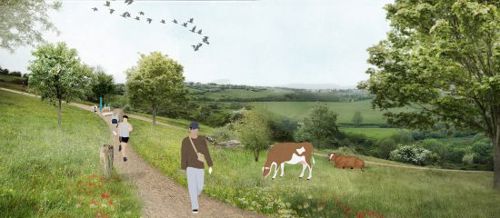
Movement is the defining structural element of the park, shaping both how people experience the landscape and how the park connects to surrounding neighbourhoods. The park will have a layered and landscaped system of safe and accessible routes that accommodate everyday mobility, active travel, social interaction, recreation, and nature immersion.
The park establishes a clear hierarchy of movement, beginning with primary east–west walking and cycling spines that connect the park’s main gateways and anchor zones. These routes follow gentler contours where possible, ensuring a high degree of universal accessibility and forming the backbone of the park’s active travel network.
Secondary and tertiary paths branch from these spines, providing connections into wood pasture landscapes, ecological corridors, and learning environments. These routes vary in width, surfacing, and character, creating a diversity of walking experiences ranging from civic promenades to intimate natural trails.
Running routes are integrated across the movement network, forming circuits that follow landscape gradients, slopes, and varied surface conditions. These routes connect activity areas, provide clear distance markers, and support a range of uses - including running, walking, and informal sport - catering to both casual users and more intensive training. Markings and wayfinding help define distances and encourage active use without restricting access to any single activity.
The movement system is completed by two main looped routes, each connecting the park’s distinct character zones. These loops offer continuous, interconnected circuits that support walking, running, and cycling.
Cycling provision supports both recreation and everyday mobility, but routes are not limited to dedicated cycle lanes. Most paths within the park are designed as shared routes, accommodating walking, running, and cycling. These routes connect the park to surrounding neighbourhoods, key destinations, and the future mobility corridor at the northern edge. Internal loops provide safe environments for family cycling, informal use, and fitness-oriented activity, while dedicated facilities - such as skill development tracks or pump tracks—offer more specialised cycling experiences.
Movement infrastructure is also a core component of the Green and Blue Infrastructure Strategy. Pathways integrated in the landscape and trails follow the existing pathway structure and gaps in hedgerows, while stormwater is managed through swales and permeable surfaces. In wetter areas, boardwalks, raised edges, and seasonal crossings maintain accessibility while protecting sensitive habitats.