

Cork City Baseline Emissions Inventory 2023
Cork City Council has published an updated Baseline Emissions Inventory for 2023, providing a comprehensive picture of greenhouse gas emissions across the city and resetting a benchmark against which future progress can be measured.
The inventory estimates that Cork City's total emissions in 2023 were 968.5 kilo tonnes of CO₂ equivalent (ktCO₂e), slightly reduced from 2018 levels. Significantly, this stability has been achieved during a period of substantial population growth, increased housing delivery, and expanding economic activity across the city.
Per capita emissions have fallen by approximately 8% since 2018, reflecting the increasing share of renewable energy in Ireland's electricity supply.
While the latest findings show encouraging signs of progress, they also underline the scale of transformation required over the coming years. As one of Europe's Mission Cities, Cork has committed to achieving an ambitious 80% reduction in emissions by 2030.
Baseline Emissions Inventory 2023The posters at the bottom of this page summarise where the city’s emissions come from. Please feel free to use these. If you’d like high-resolution copies for printing, contact us at climateaction@corkcity.ie.
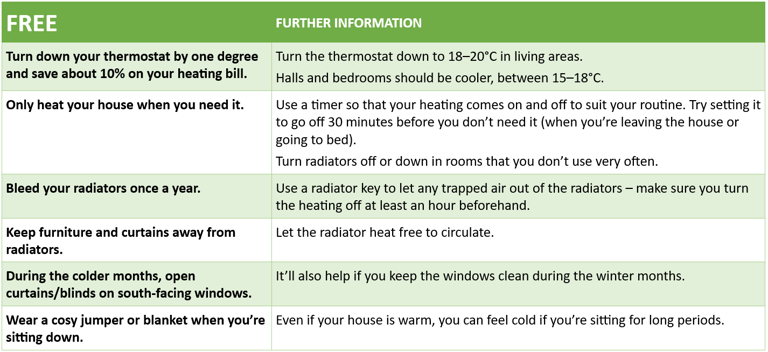
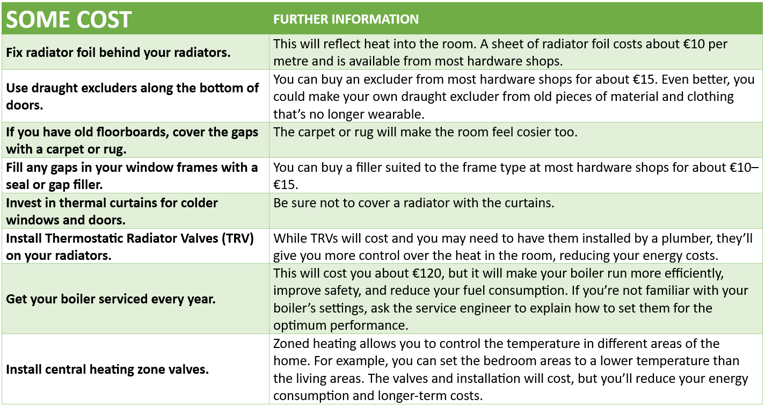
Reduce your Energy Use at Home
There are about 70,000 homes in Cork city. Most use fossil fuels for heating and cooking. Because of this, our homes are the biggest source of greenhouse gases in the city.
A deep retrofit and a shift to renewable energy may be beyond your means, but there are things we can do to reduce our reliance on gas, oil, and coal. Whether you own your home or rent, you can reduce your energy costs, and it will also help our environment. When it comes to making our city greener, every little helps.
These tips won’t suit everyone so be sensible, especially if you have older or infirm people in your household.

Reduce your Energy Use on the Road
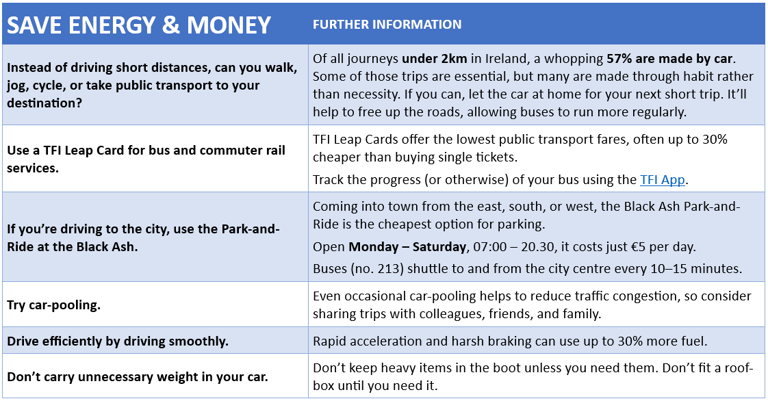
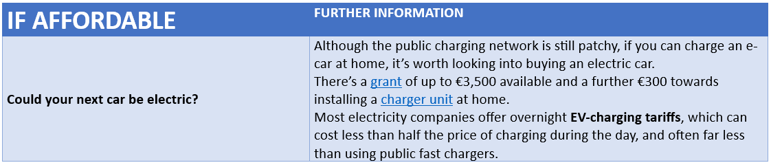
As elsewhere in Ireland, most journeys in Cork city are undertaken by private car. That’s largely why transport accounts for 30% of the city’s emissions. But there’s a notable increase in active travel and the use of public transport too.
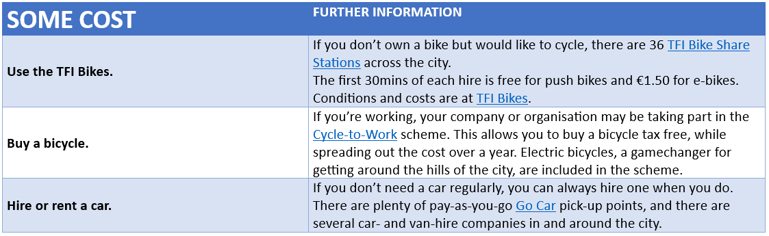
There are now almost 90km of dedicated on-street cycle lanes, shared active-travel facilities, and greenways in the city. Passenger numbers on commuter trains have risen massively since 2019 with increases of 28%, 78% and 82% to and from Cobh, Midleton, and Mallow. Planned improvements in the bus system and the installation of a light rail system will provide unparalleled options for the travelling public.
In the meantime, there are small ways that we can all help to reduce emissions from transport.
Some useful sources of information:
All you need to know about energy savings and grants - from the SEAI
The Environmental Protection Agency - data and advice on climate change in Ireland
Further data and information on Climate Change in Ireland from the EPA


