

Demystifying Digital Twins
This event hosted by Cork City Council is focused on clarifying what digital twins are (and are not) and how they differ from 3D models.
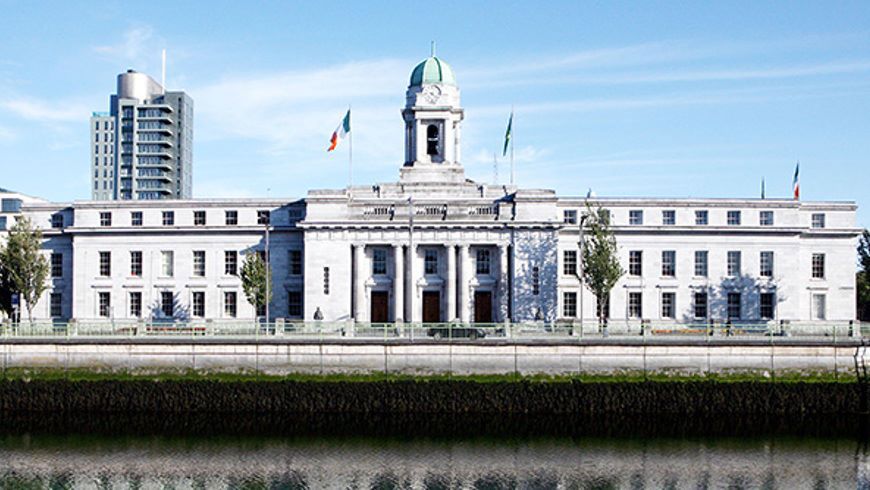
Taking place at Cork City Hall on Wednesday, 11 February 2026, from 9:00 AM, the event brings together national policy leaders, local authorities, infrastructure providers, and ecosystem partners to explore how digital twins can be understood and applied in practice within an Irish local government context.
Rather than showcasing technology for its own sake, the day is designed to bring participants on a journey - from national digital strategy direction, through local delivery realities, to practical, hands-on examples. Attendees will gain a clearer understanding of how digital twins support areas such as energy, transport, planning, and climate action, and how European projects like TIPS4PED are used as sandboxes to test approaches and inform long-term roadmaps.
Agenda
Welcome
9.00 AM - 9.20 AM
Welcome from the Lord Mayor of Cork, Cllr. Fergal Dennehy. M.C. David Joyce, Director of Emergency Management & Climate Action will set out the strategic context for the day, and outline Corks Mission City focus.
Speakers:
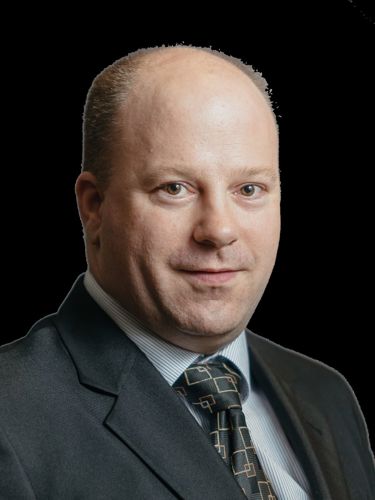
Mr. Joyce is the Director of the Emergency Management & Climate Action Directorate in Cork City Council. He has responsibility for the provision of a wide range of services to the communities and business of the city, including:
- Fire Emergency Response and Prevention
- Building Control
- Climate Action and Sustainability
- Energy Management
- Public Service Design and Improvement across all of the City Council’s Public Services
Cork City is one of the European Union’s 100 "Climate Neutral and Smart" Mission Cities. Mr. Joyce leads Cork’s involvement at an international level on this Mission and is responsible for steering the businesses and communities in the City towards a cleaner and greener future by significantly reducing the Cities energy use and carbon emissions.
He has over 26 years experience in Local Government and previously led the City Council‘s Operations Directorate (comprising Roads, Traffic, Environment, Water, Recreation and Parks) as well as the Transition Directorate which, in May 2019, delivered the boundary extension to the City Council’s administrative area. This was the largest change project in Local Government in Ireland in 25 years and resulted in a fivefold increase in the size of Cork City Councils jurisdictional area and an almost doubling of the population served by the City.
He also holds a Master’s Degree in Local Government Management as well as qualifications in Public Procurement, Managing Change and in Corporate Governance. He has completed the “Senior Executives in State and Local Government Program” in the John F. Kennedy School of Government at Harvard University. He has recently completed the Irish Government’s Senior Public Service Strategic Leadership Programme for Senior Civil and Public Servants and, in 2022, participated in the Foreign Affairs Office of the Shanghai Municipal People’s Government’s Senior Irish Officials Training Programme.
He is also a member of the national City and County Management Association (CCMA) Corporate and Emergency Planning Committee as well as a number of other Local Authority advisory committees. In addition, he is a member of the Climate Change Adaptation Committee of the National Climate Change Advisory Council which advises the Irish Government on Climate Adaption Policy. He has also represented Cork City at various national and international conferences and presented on various topics at same.
High-Level National Perspective
Dr Mihai Bilauca, Chief Information Officer, Department of Housing, Local Government & Heritage will outline where national digital policy is heading and how it is being translated into local delivery. This session will explore: National government priorities for digital transformation The mandate for local authority digital strategies How cities can operationalise this direction This provides a shared reference point for the rest of the day.
From National to Local Practice
Panel: Representatives from the Local Government Management Agency, Cork City Council, Tyndall and Republic of Work will join Dr Bilauca to discuss how digital strategy moves from policy intent to practical delivery. The discussion will address: How cities prioritise digital initiatives The role of partnerships and ecosystems What “good” looks like in terms of governance, alignment, and organisational readiness
Speakers:
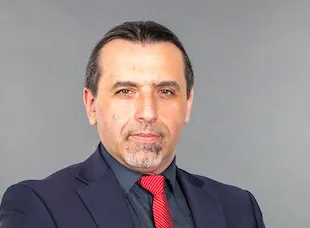
As the most senior adviser to the Minister, the DHLGH Management Board and DHLGH agencies on ICT and Digital Transformation, Dr. Mihai Bilauca is responsible for driving the Government digitization agenda for DHLGH, inherently directing the digital transformation programme across the agencies under its remit and especially the Local Government sector by fostering effective partnerships for a coherent governance and strategic direction in line with the wider public service. Dr. Bilauca has responsibility for shaping the strategic direction for Digital platforms, Data and ICT, leading and directing staff and other resources; providing support and advice on digital technologies and transformation to DHLGH senior management and all agencies under its remit.
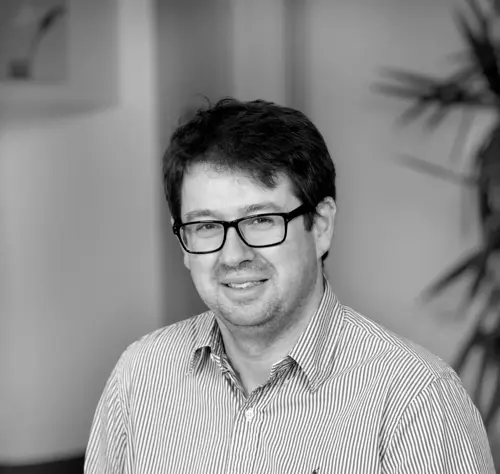
Dr Pádraig Lyons leads the International Energy Research Centre at Tyndall National Institute. He has held a number of roles across research, academia, consultancy and in industry. He received his BE degree in electrical and electronic engineering and an MEngSc degree in electrical engineering from University College Cork and received his PhD degree from Durham University, UK. Dr Lyons is a chartered engineer, is a Fellow at the School of Engineering, University College Cork and is a member of the IEA established International Smart Grid Action Network's (ISGAN's) Working Group 7 on Smart Grids Transitions.
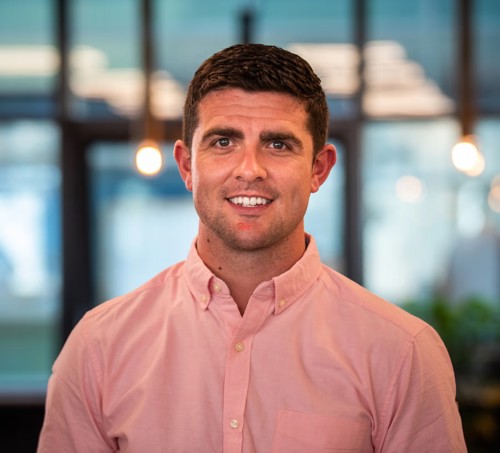
Frank Brennan is the CEO of Republic of Work, a co-working and innovation campus located on South Mall in Cork, Ireland. He has been with Republic of Work since its inception in 2017 and was the first employee of the organization. Brennan has been instrumental in scaling up operations and has been involved in the company's growth trajectory, which has seen it become one of Europe's best startup communities. The acquisition of Republic of Work by Brennan marks a new chapter for the company, with the CEO expressing his ambition to lead the innovation and co-working space to even greater heights.
Coffee & Networking Break
Kicking the Tires: Digital Twins in Cork Today
This session is a practical exploration of digital twins and 3D models currently in use in Cork Participants will see real examples including : 1. TIPS4PED- IES Digital Twin: Positive Energy District and Energy demand–supply modelling in Cork Docklands City-scale 3D modelling for planning and regeneration Data architecture, repositories, and governance considerations. High-resolution modelling and visualisation The aim is to allow participants to see how things work, ask questions, and understand limitations as well as opportunities. 2. IERC(Tyndall Institute): Data repositories & sovereignty-aligned architecture; decoupled storage with secure APIs feeding the digital twin. 3. RealSim’s Cork 3D Model: Current visual environment and the context of redevelopment. 4. Prof. Ger Dooley, CoDirector School of Robotics,UL: Corks City Hall Campus, with real time "dolls house" creation on site.
Speakers:

Mohammad Mizanur is a Research and Innovation (R&I) Consultant specialising in community-level energy modelling, low-carbon masterplanning, and embodied carbon analysis. He holds a Bachelor’s degree in Mechanical Engineering from Tunku Abdul Rahman University College (TARUC), Malaysia, and a Master’s degree in Sustainability Engineering from Waterford Institute of Technology (WIT), Ireland, where he graduated with First Class Honours. His postgraduate research on sustainable energy systems was published in 2021.
Mizanur began his career with Integrated Environmental Solutions (IES) through their Graduate Programme, where he developed strong expertise in VE energy modelling. Over time, he became a key contributor to the development and application of IES’s Intelligent Community Lifecycle (ICL) suite, working across consultancy and R&D projects. His contributions have supported major initiatives in Ireland, the UK, and across Europe, helping organisations and local authorities accelerate decarbonisation and improve sustainable outcomes at district and city scales.
In his current role, Mizanur works across numerous R&D projects, providing strategic support in city-scale masterplanning and energy analysis. His work frequently focuses on renewable energy integration, decarbonisation pathways, and data-driven approaches to urban sustainability. Mizanur’s professional interests include district energy systems, building-to-grid interactions, climate-resilient planning, and the development of advanced digital tools to support sustainable and future-ready communities.
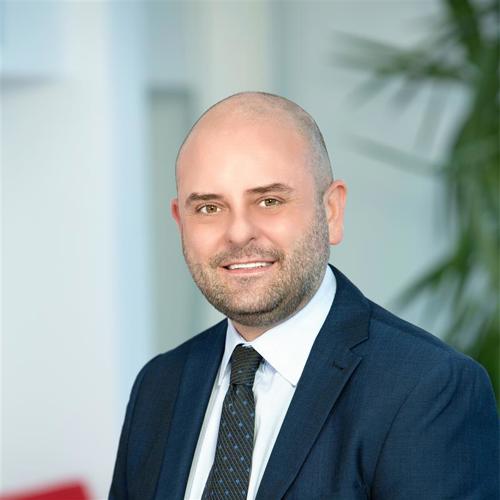
Brian O’Regan is Head of the Energy Informatics Group (EIG), leading national and EU research on Symbiotic Buildings, where energy trading, building intelligence, and edge IoT enable next-generation flexibility and optimisation services. Current projects include O-CEI, where he leads energy flexibility pilots across Europe, INNOV8HEAT, focused on AI-enabled industrial heat decarbonisation, and OPTIX, advancing transactive energy and community-scale optimisation. He has previously led multiple DTIF, EU, IEA and Erasmus-funded initiatives. Brian is a UNECE Subject Matter Expert in the Group of Experts on Energy Efficiency and a Steering Group member of Energy Cork. His work centres on Symbiotic Buildings, Energy Communities, Edge IoT, and AI/ML-driven flexibility for future digital energy systems.
Lunch Break
Electrification & Transport
-
This session grounds the digital twin discussion in real infrastructure realities. Irish Rail and ESB Networks will outline: Planned upgrades and future investment trajectories Capacity constraints and system dependencies Why understanding supply, demand, and timing is critical for planning and delivery This session reinforces why digital twins must be linked to real operational systems, not treated as abstract tools.
Speakers:
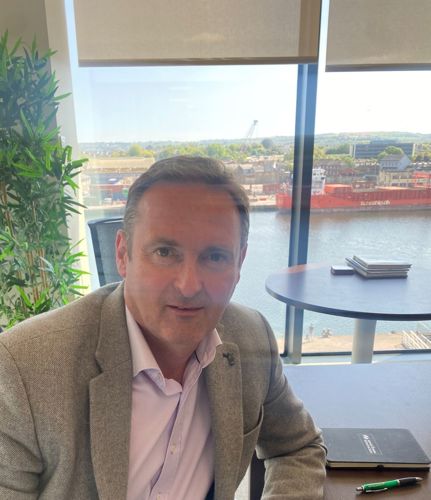
AJ Cronin joined IÉ in 1988 as an apprentice fitter and has worked in Iarnród Éireann throughout his career. He has held management and leadership roles across the organisation including fleet, safety, change management, infrastructure, and operations. He was appointed to the role of Delivery Manager Cork Area Commuter Rail Programme in November 2021 responsible for the delivery of the transformative heavy rail programme of circa €1.8Bn investment in the Cork area. His role has expanded to include project delivery for the South and West regions of the rail network. He previously managed the Infrastructure Operations department of IÉ and the organisation’s response to COVID-19.
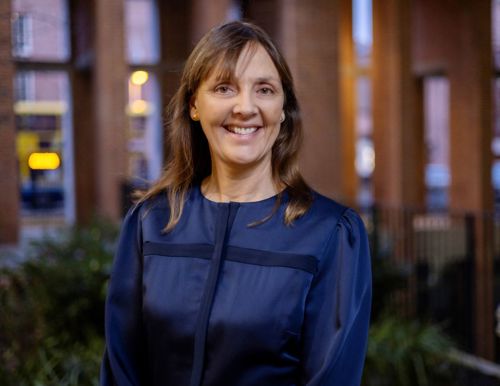
Gráinne joined ESB as a graduate engineer in 1989. She holds a primary degree and master’s in engineering from Trinity College Dublin and Dublin City University respectively as well as a Diploma in Asset Management from the Institute of Asset Management and a diploma in Company Direction from the Institute of Directors. A Chartered Engineer (Engineers Ireland), Gráinne has worked in ESB Networks, Power Generation and Supply. She is currently Business Strategy Manager for ESB Networks. She was elected by her colleagues under the worker participation act of 1977 to the Board of ESB in 2023. She represents ESB Networks on a number of European groups including E.DSO, Eurelectric and the EU DSO Entity as well as the Electricity Association of Ireland.
Focus on Data Governance, Strategy, and Collaboration
Panel: Representatives from University College Cork, Cork City Data Management, CIX, and SFI will join Corks European Project TIPS4PED Manager to discuss the enablers of delivery. Looking forward, and identifying what is needed to move from experimentation to sustainable practice. Topics include Data governance and responsibility Strategy implementation Collaboration across local authorities, smart regions, and sectors How learning from European projects can inform long-term roadmaps.
Speakers:
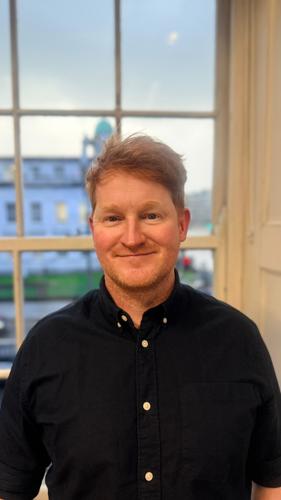
Brian Higgins works as an ITS Data Analyst with Cork City Council and has been in the role for a year and a half. He holds a Masters in Data Science and Analytics from MTU. In his current role, Brian works across multiple projects including mobility dashboards, Open Data Directive sharing, data management planning and energy data reconciliation and automation projects.

Andrew is focused on fostering strategic partnerships and driving commercial engagement between Irish businesses and the Gateway’s cutting-edge research and development capabilities. He leverages Nimbus’s deep expertise in areas such as the Internet of Things (IoT), cyber-physical systems, and wireless technologies to help companies innovate, enhance their products, and access crucial funding mechanisms, ultimately accelerating technological adoption and driving business growth.
Andrew has been working at Nimbus for over ten years, with the last five years focused on research in extended reality (XR) technologies as part of the Extended Reality Innovation Lab.He is also a part-time PhD student, exploring human experiences within mixed reality digital twin environments. His career has spanned various domains, including energy, industrial product design, multimedia, and user interface system design.Outside of work, he is a husband and father, roles that he holds as his highest priorities. He also serves in his local church (Passage Baptist Church) through preaching and teaching the Bible. In his free time, he enjoys playing music, self-improvement, and contributing to personal and community growth