
National and Local Leaders Gather in Cork to Align Digital Innovation with Climate and Infrastructure Delivery
16/02/2026
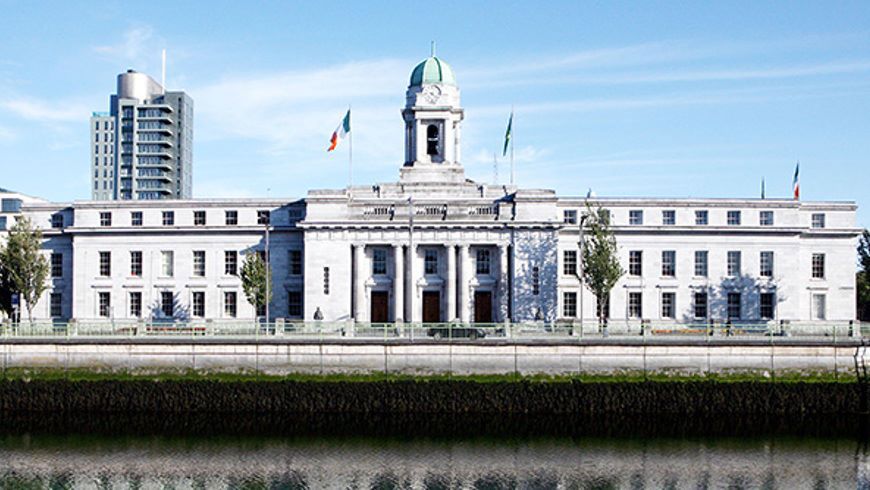
National government, infrastructure providers and local authorities gathered at Cork City Hall last week for Demystifying Digital Twins — a strategic forum focused on aligning digital innovation with climate targets, infrastructure planning and responsible public governance.
The event, hosted by Cork City Council, Tyndall Institute and Republic of Work under the EU-funded TIPS4PED programme, brought together senior representatives from national government, ESB Networks, Irish Rail, the LGMA and European research partners to explore how digital tools can support climate-neutral urban development.
Opening the forum, Lord Mayor of Cork, Cllr. Fergal Dennehy, positioned Cork’s work within Ireland’s wider climate commitments.
“Cork has committed to being at the forefront of Europe’s climate mission. Digital innovation must go hand in hand with sustainability — but it must also be grounded in infrastructure, governance and the lived experience of our citizens.”
Delivering the national keynote, Dr. Mihai Balauca of the Department of Housing, Local Government and Heritage emphasised that digital transformation requires structure as well as ambition.
“Digital transformation in local government is not about deploying technology alone. It is about governance, interoperability and shared services that enable local authorities to act with confidence. Alignment between national policy and local delivery is essential if we are to meet Ireland’s climate and planning ambitio.”
Aisling Hyland of the Local Government Management Agency highlighted how the Local Government Digital & ICT Strategy 2030 and the development of a national Smart Communities business case are creating a coordinated framework for adopting emerging technologies.
“Through structured shared services and a national Smart Communities approach, local authorities can adopt technologies such as digital twins in a way that is connected, sustainable and aligned with long-term public value.”
Infrastructure delivery formed a central focus of the afternoon session.
Gráinne O’Shea of ESB Networks outlined the scale of grid transformation required to support electrification.
“Electrification is central to Ireland’s decarbonisation future. Grid reinforcement and capacity planning must be informed by long-term visibility. Early and open engagement between cities and infrastructure providers ensures ambition is matched by network capability.”
AJ Cronin of Irish Rail emphasised the importance of sequencing and early alignment in regeneration projects such as Cork Docklands and Kent Station.
“Rail infrastructure operates on long planning horizons. When cities plan regeneration or modal shift, coordination with transport providers must happen early. The opportunity in Cork’s Docklands is significant — but alignment and sequencing are key.”
From a collaboration perspective, Frank Brennan of Republic of Work reflected on the value of cross-sector dialogue in advancing digital innovation.
“When public authorities, infrastructure providers and research institutions collaborate in a structured way, we create the conditions for meaningful innovation. It is through partnership that digital ambition becomes practical delivery.”
Corina Hanrahan, European Projects Manager at Cork City Council, outlined how European funding enables cities to experiment responsibly before committing to large-scale investment.
“European projects such as TIPS4PED give cities the space to test, learn and build capability before scaling. Digital twins are not control systems — they are decision-support tools. The focus is confidence, clarity and alignment with climate strategy.”
Throughout the day, speakers reinforced that digital twins are structured systems combining modelling and real-time information to support informed planning — not stand-alone platforms.
The event concluded with a discussion on data governance, collaboration and the skills required within local authorities to manage increasingly complex digital and climate responsibilities.
Cork City Council confirmed that learnings from the forum will directly inform its EU Mission City commitments and ongoing Climate Action Plan implementation.