
TIPS4PED
The TIPS4PED project is examining how Positive Energy Districts (PEDs) can be optimally designed and delivered via the deployment of Digital Twin technology – a real-time, digital replica of a physical urban neighbourhood, integrating data from various sources (which in turn means a rounded consideration of buildings, their users, the energy network and IT systems) to monitor, analyse and interpret energy performance.
Understanding the patterns of energy consumption, or demand, allows for consideration in how to meet this demand in a climate-positive manner – allowing for usage reduction and/or added inputs (e.g. renewables) on the supply side.
Under the project, detailed consumption data (e.g. from sensors or energy systems) is fed into a tailored software platform devised to allow for the simulation of different local energy grid supply/demand scenarios. These then support enabling evidence-based choices and decision-making on effective future interventions for strategic energy efficiency and sustainability management.
A suite of tools capable of providing a feedback loop to the software development process is being developed. The solutions are being tested and validated in Turin (‘Lighthouse’ city) with further replication studies to be conducted in three ‘Follower’ cities – Cork, Kozani and Budapest – resulting in the creation of local Digital Twins and decarbonisation roadmaps.
Beyond technology concerns, the project also addresses economic/ financial, regulatory/policy and social engagement challenges, such as empowering behavioural change among key local stakeholders, to ensure broad implementation and scalability.
It is funded by Horizon Europe under the EU Mission on Climate-Neutral & Smart Cities.
The local focus is on informing energy management in the sustainable planning of the Cork Docklands regeneration zone – by consideration of e.g. advanced energy management systems; storage technologies to reduce grid demand; building-systems design and management; and optimisation of consumption and energy demand by all users.
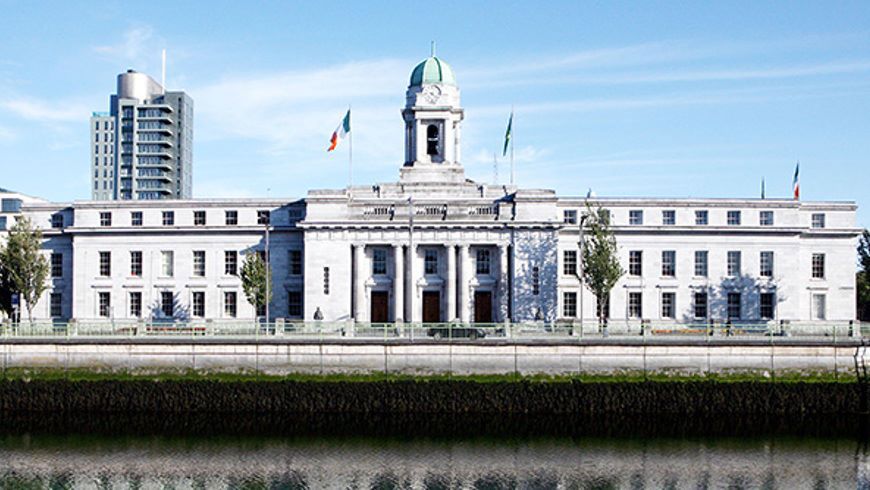
Under the umbrella of the project, on 11 February 2026, the high-profile ‘Demystifying Digital Twins’ conference was held in Cork City Hall in conjunction with the Department of Housing, Local Government & Heritage (DHLGH) and the Local Government Management Agency (LGMA) as part of the roll-out of the national ‘Smart Communities’ agenda where Cork City Council’s digital strategy development was showcased to a national audience.