
Cork Docklands to be Exemplar in Shaping Climate-Ready Cities
05/03/2026
Cork City Council is using the docklands - one of Ireland’s largest urban regeneration projects - to show how Ireland’s cities can grow in ways that work with nature, not against it.
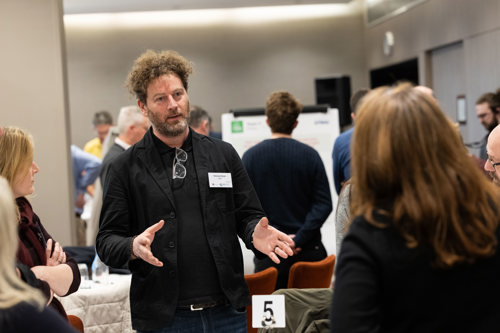
The local authority hosted a Nature-Based Solutions (NbS) docklands tour and collaborative workshop for representatives from Cork City Council and Dublin City Council this week.
David Joyce, the Director of Emergency Services and Climate Action at Cork City Council, opened the event by saying as cities grow, we need smarter ways of designing them.
“Nature-based solutions allow us to manage water, reduce flood risk and create better public spaces, all in one integrated approach. What we are integrating in Cork’s Docklands shows how this thinking can be embedded from the very beginning of a major development,” he said.
The day began with a cycle tour of the Cork Docklands, one of the largest urban regeneration projects currently underway in Ireland. The Docklands, which spans some 147 hectares on both sides of the river Lee, is being transformed into a new city quarter with homes, jobs, parks and sustainable transport links. Participants explored how nature-based features are already being built into the redevelopment, including rain gardens, permeable paving, new tree planting and sustainable drainage systems (SuDS) which are all designed to slow and absorb rainfall before it reaches underground pipes, reducing flood risk while creating greener, more attractive streets and public spaces.
In a city shaped by water, managing surface water is essential. By planning for this from the outset, Cork is ensuring that climate resilience forms part of the foundation of future growth.
The tour was followed by a collaborative workshop which focused on how to make this joined-up approach standard practice.
The session was led by Brendan Gordon of KPMG, who guided participants through a dynamic design-thinking process aimed at turning ideas into practical action.
Representatives from housing, water, transport, planning and climate services examined how projects can take a whole-systems approach, linking water management, biodiversity, housing delivery and public realm design from the very beginning of development. “The level of engagement for Nature Based Solutions, or NbS, is extremely encouraging,” Mr Gordon said. “When you bring together people from different sectors and create a structured space to collaborate, you can see how powerful that collective approach becomes. “This workshop was designed to focus on how we move forward together and embed NbS into projects from day one.”
Roy O’Connor, Senior Engineer with Dublin City Council’s Protection of Waterbodies Office, emphasised the importance of collaboration between the two cities.
“Cork and Dublin are working closely together to align our thinking and delivery models,” Mr O’Connor said, “This is about sharing knowledge and ensuring that NbS are embedded into development projects from the outset. If we get that right, we are shaping more resilient cities for generations to come.”
Fran Igoe, from LAWPRO, the Local Authorities Water Programme, highlighted the water quality benefits, and said: “Improving the health of our rivers requires practical action on the ground. Collaborative approaches like this help ensure that water quality, biodiversity and community wellbeing are considered together.”
Francis Finnerty, of Uisce Éireann, said: “Managing rainwater at surface level reduces pressure on sewer networks and supports sustainable growth. Integrated planning strengthens both infrastructure and environmental protection.”
Michael Goan, Sustainability Lead with the Land Development Agency, said: “Embedding sustainable drainage and green infrastructure from the beginning makes developments stronger, more attractive and better prepared for the future. Collaboration between cities and agencies is key to making that happen.”
Sharon McDonnell, Strategic Planning Lead at Cork City Council, closed the event by saying the Docklands redevelopment shows what is possible when we plan for water, biodiversity and community needs together. “By strengthening collaboration between Cork, Dublin and our national partners, we can engage nature-based solutions to play a key role in enabling sustainable and resilient growth for our cities,” Ms McDonnell said.